this is a test blog
Leave a CommentCategory: Uncategorized
 If you’ve ever been in the trenches of underground construction, you’ll know that “big drill” work isn’t for the fainthearted. imagine scaling those bores across state lines, punching a hole in miles of forms, documents, phone calls, data, and other various mountains of bureaucratic red tape, only to find yourself standing at the precipice of a new dawn.
Let me introduce you to Mainline LLC, a relatively new but fiercely ambitious underground construction company based in Oregon. They specialize in large package directional drilling – think mammoth drills that could probably tunnel to the center of the Earth if they wanted to.
Mainline LLC is owned by the dynamic, young, and incredibly hardworking couple, Keshia and Lucas Mora. Their two adorable kids could charm the socks off anyone, and Keshia, the superwoman running the show behind the scenes, also operates the big drill and drives every CDL vehicle imaginable. To add to their adventure, Keshia is pregnant again. Yes, you read that right.
A few weeks ago, Lucas gave me a call. He sounded more exasperated than usual, which was saying something. Lucas: “I did it again!… Me: You did what again? Lucas: Keshia’s… She’s pregnant again!! We need you to help get Mainline licensed to do business in Washington, Idaho, California, and Montana!!!” he said. “Can you handle it?” Me: S, S, Sh, Sure?…
If you’ve ever tried to navigate the labyrinthine process of getting licensed in another state, you know what a Herculean task that is. The bureaucratic red tape in each state is enough to make anyone consider a career change. But hey, I’m always up for a challenge… and I’m not pregnant. So, I rolled up my sleeves and dove in. Here’s a detailed (and slightly exaggerated) account of what it takes to get licensed in these four vastly different states. Buckle up, because this is going to be a bumpy ride.
Washington: The Evergreen Gauntlet…
First up, Washington. Known for its lush forests and tech giants, Washington’s licensing process is a beast of its own.
- Business Registration: Registering your business in Washington is like filling out paperwork for a NASA mission. You need to file a Certificate of Authority with the Secretary of State. This involves a mountain of forms, each demanding more information about your company than you even knew existed.
- State Business License: Next, you need a state business license from the Department of Revenue. This is another round of forms, fees, and verification processes. You’ll need to provide detailed financial statements, your business plan, and sometimes even a personal history.
- Contractor License: Since Mainline LLC is in construction, a contractor license is a must. This means passing an open-book exam (which is both a blessing and a curse) and proving that you have the necessary insurance and bonding.
- Local Licenses: Depending on where you plan to operate within Washington, you may need additional local licenses. Each county and city has its own set of rules, and navigating these can feel like playing a high-stakes game of whack-a-mole.
Idaho: The Gem State’s Bureaucratic Minefield..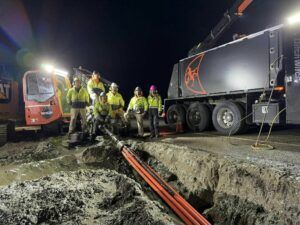
Next, we venture into Idaho. You’d think the Gem State, with its wide-open spaces and friendly residents, would have a simpler process. Think again.
- Foreign Entity Registration: To do business in Idaho, you need to register as a foreign entity with the Secretary of State. This involves submitting a Certificate of Good Standing from Oregon and a bunch of other documents that prove you’re a legitimate business.
- Idaho Business License: Idaho requires a state business license, but it’s not as straightforward as it sounds. You need to apply for an Idaho Sales Tax Permit and a Withholding Tax Permit, even if you don’t plan to sell anything or hire employees right away.
- Contractor Registration: For construction companies, you need to register as a Public Works Contractor. This involves proving your experience, financial stability, and providing a list of previous projects. You also need to pass a background check, which can take weeks.
- Local Permits: Similar to Washington, Idaho has local permit requirements that vary by county and city. Each locality has its own set of rules, fees, and wait times. Some require public hearings, which can delay your project by months.
California: The Golden State’s Golden Bureaucracy…
California, the land of opportunity and endless regulations. If you thought Washington and Idaho were tough, welcome to the big leagues.
- Foreign Qualification: First, you need to qualify as a foreign corporation. This involves submitting an application to the California Secretary of State, along with a Certificate of Good Standing from Oregon. The application process is notoriously slow, so patience is key.
- California Business License: Obtaining a state business license from the California Department of Tax and Fee Administration is a multi-step process. You need to register for a seller’s permit, even if you don’t plan to sell physical goods. This requires detailed financial projections and a comprehensive business plan.
- Contractor License: The Contractors State License Board (CSLB) requires you to pass two exams – one on law and business, and the other on your specific trade. You need to provide proof of at least four years of experience, financial statements, and a surety bond.
- Environmental Compliance: California is big on environmental regulations. Depending on your project, you may need to comply with the California Environmental Quality Act (CEQA), which involves submitting detailed environmental impact reports. This can add months to your timeline.
- Local Licenses and Permits: Each city and county in California has its own set of licensing and permitting requirements. Some areas, like Los Angeles and San Francisco, have notoriously complex processes that involve multiple agencies and public hearings.
Montana: The Last Best Place’s Licensing Labyrinth…
Finally, we arrive in Montana. The Big Sky Country may seem laid-back, but its licensing process is anything but.
- Foreign Entity Registration: As with the other states, you need to register as a foreign entity with the Montana Secretary of State. This involves submitting a Certificate of Good Standing from Oregon and detailed information about your company’s operations.
- Montana Business License: Montana requires a state business license, which you can obtain from the Montana Department of Revenue. You need to register for income tax withholding, unemployment insurance, and workers’ compensation insurance, even if you don’t have employees in the state yet.
- Contractor Registration: For construction companies, you need to register with the Montana Department of Labor and Industry. This involves providing proof of insurance, bonding, and passing a background check. You also need to submit a list of previous projects and references.
- Local Permits: Montana’s local permitting requirements vary widely by county and city. Some areas require additional environmental impact assessments, while others have specific zoning regulations that you need to comply with.
The Emotional Roller-coaster…
Navigating the licensing process in multiple states is an emotional roller-coaster. There are moments of simple triumph, like when you finally receive a call back from the California secretary of state after days of waiting. And then there are moments of despair, like when you realize you missed a check mark on a crucial document and have to start the process all over again.
At one point, I reached my breaking point. The paperwork, the endless forms, the phone calls with wait times that made me feel like I was getting going nowhere… it was all too much for my senior brain.
In a moment of quiet despair along with a little cursing under my breath, I decided to ask my sister-in-law Linda to help me out. Linda has a knack for dealing with intense bureaucracy and the tenacity of an angry bulldog. With her attention to detail and her ability to flirt in a responsible, “I’m married” sort of way with insurance guys and government employees, she agreed to jump in and help me tackle this project. I think it was a good call, too. Her charm mixed with relentless follow-up with a double shot of tenacity have kept us moving forward on this difficult project. Thanks to Linda, what felt like a bureaucratic nightmare began to look a little more like an achievable endeavor.
Tips for Surviving the Licensing Gauntlet…
- Start Early: The licensing process can take months, so start as early as possible. Don’t wait until you have a project lined up to begin the process. Cross the project bridge when you have the permit in hand.
- Stay Organized: Keep meticulously detailed records of all the documents you submit and the deadlines you need to meet. A spreadsheet or project management tool can be a lifesaver.
- Seek Professional Help: Don’t be afraid to seek help from professionals, such as attorneys or business consultants, and “yours truly,” who are somewhat familiar with the licensing process or at least have the tenacity and caffeine to get through the process come what may.
- Be Patient: The process is ridiculously slow, complicated, and frustrating, with endless time spent on hold, followed by endless time talking with friendly people not all that cut out for the job they somehow landed, but patience is key. Don’t get discouraged by setbacks… just keep pushing forward.
- Network: Connect with other business owners who have gone through the process and make friends with the government employees on the other end of the phone. They can provide valuable insights and advice… or totally wreck your world, depending on your current demeanor.
Conclusion…
Expanding your business into other states is a harrowing task, but it’s also incredibly rewarding. I promise, the experience will test your patience, your organizational skills, and your ability to navigate complex bureaucratic systems. But with determination and a bit of a twisted sense of humor, you can conquer the licensing gauntlet and open up new opportunities for your business. So, if you’re considering expanding into other states, take a deep breath and dive in. The process may be overwhelming, but the rewards are well worth the effort. And who knows, you might even enjoy the ride. However, if you don’t and you’d rather spend more quality time with your kids instead of being buried in bureaucracy, remember, you can “Just Call Rich!“